RPM Patient Onboarding: From Introduction to a Working Device
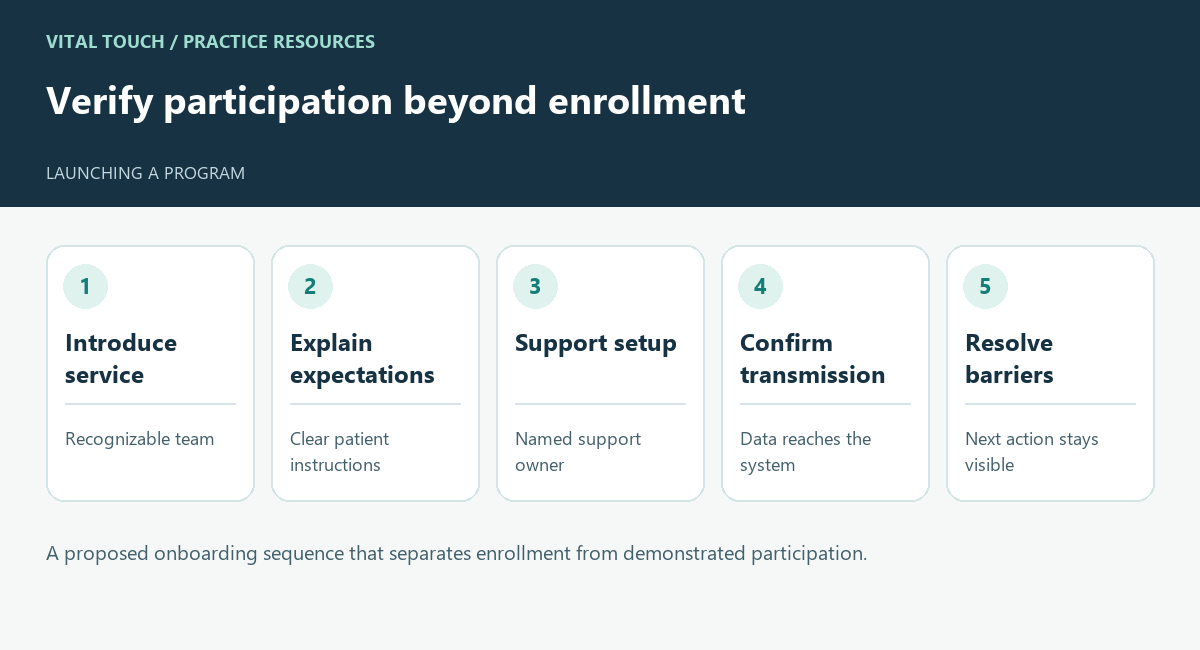
A proposed onboarding sequence that separates enrollment from demonstrated participation.
RPM patient onboarding should end with a patient who understands the service and can use the agreed device. A name on an enrollment list or a shipment confirmation does not establish that those steps are complete.
CMS includes patient education and device setup among RPM’s core components. A practical onboarding process should make those steps visible and provide support when they do not go as planned.
Introduce the team before the first call
Agree on how the practice explains the external team’s role. Give patients a way to recognize legitimate contact and verify whom they are speaking with.
The introduction should answer basic questions: why the practice is offering the service, what the patient is being asked to do, and how to reach the right person for help. Keep coverage and cost explanations aligned with reviewed information rather than relying on a generic promise.
Check the setup barriers early
Ask how the program identifies language needs, accessibility concerns, connectivity limitations, and requests for caregiver assistance. Do not assume those needs based on age or diagnosis.
Use the information to plan support within the patient’s authorized preferences and the practice’s policies. If the proposed device or setup process is unsuitable, route that concern to the appropriate team before treating the patient as fully active.
Demonstrate the device workflow
In Vital Touch’s documented workflow, the team explains the program, answers questions, obtains and documents informed consent, and sets expectations about participation and possible patient costs. For shipped devices, the team tracks delivery and helps the patient take the first reading and understand the device. Setup then transitions into ongoing care management rather than ending at shipment. Decide who performs that support and where questions go when the first explanation is insufficient.
Verify that information reaches the intended system. A patient may believe setup is complete while the team is still unable to receive data. Make that difference visible so staff can follow up without asking the patient to repeat work unnecessarily.
Track the unresolved stages
Use operational stages that describe what has actually happened, such as awaiting introduction, setup in progress, transmission confirmed, and support needed. These are proposed workflow labels, not billing statuses.
Keep the next action and owner attached to each unresolved case. Shipment, attempted contact, and confirmed participation should remain separate in reporting.
Give the patient a clear support route
Patients need instructions for device difficulties and questions about participation. Explain the team’s actual availability and the practice-approved route for urgent concerns.
Review the first cohort’s setup issues before expanding. Repeated connection failures or confusing instructions are signals to improve the process, not simply increase outreach volume.
A useful question for any RPM partner is: “Can you show us how you know a patient has moved from enrollment to a working device?” Compare managed-care responsibilities with the onboarding support your practice needs.
